
Browser Games›Bridges
Bridges is the island-connecting logic puzzle also known as Hashi or Hashiwokakero. Each island shows how many bridges it needs. Build one or two bridges between neighbouring islands until every number is met and all the islands form one group. There are 60 puzzles in three sizes, each with exactly one solution.
How to play Bridges
- The board is a sea with round islands. The number on an island tells how many bridges must end there.
- A bridge joins two islands that face each other along a row or a column, with only water between them.
- Two islands can be joined by one bridge or by two, never by more.
- Bridges run straight. They cannot cross another bridge or pass over an island.
- The puzzle is solved when every island has exactly its number of bridges and you can walk from any island to every other one.
Controls on phone and desktop
- Phone, tablet and mouse: tap or click the water between two islands. The first tap builds one bridge, the second makes it two, the third removes them. Any spot in the gap counts.
- Drag: start on an island and drag toward a neighbour to change the bridge on that side.
- Keyboard: the arrow keys move from island to island, Shift with an arrow key builds toward that side, Z takes back a step and H gives a hint.
- Undo goes back step by step. Restart clears every bridge, and Undo can bring them back.
- Hint builds one bridge that is certain from the bridges already on the board. If one of your bridges is wrong, the hint lights that bridge in red instead.
What the colours mean
- Sand: the island still needs bridges. Green: it has exactly its number. Red: it has too many.
- Orange with a turning ring: a finished group that is separate from the rest. All its islands are full, so nothing can join it any more, and one of its bridges has to change.
- Dotted lines show where a bridge can still be built. They disappear when a bridge crosses their path.
Sizes and difficulty
- Small, 7 by 7 (puzzles 1 to 20): 9 to 16 islands.
- Medium, 9 by 9 (puzzles 21 to 40): 15 to 24 islands.
- Large, 11 by 11 (puzzles 41 to 60): 24 to 34 islands.
- Inside each size the puzzles go from gentle to hard. The first ten fall to the simple patterns below. The last ten also need you to think one step ahead.
- All boards are open from the start. The clock starts with your first bridge, and at the end you see your time, your best time and the hints used.
Tips and solving patterns
- Full house: an 8 with four neighbours, a 6 with three or a 4 with two takes two bridges in every direction.
- One short of full: a 7 with four neighbours, a 5 with three or a 3 with two needs at least one bridge in every direction.
- Only one neighbour: all the bridges of that island go there.
- What the neighbour can take: an island showing 1 accepts one bridge at most. A 3 between a 1 and a 4 must send two bridges to the 4 and one to the 1.
- Do not close a pair: two islands with 1 are never joined to each other, and two islands with 2 never share a double bridge. The pair would be full and cut off from the rest.
- Use the crossings: a new bridge closes every gap it cuts through. Count again at the islands on both sides.
- Think one step ahead: if leaving a gap empty would leave an island short, or would seal a small group away from the rest, that gap needs a bridge.
Rules used here
- Standard Hashi rules: bridges along rows and columns only, at most two between the same pair of islands, no crossings, and one connected group at the end.
- All 60 puzzles were made for WiseChecker by a program and checked by a solver: each has exactly one solution, and it can be reached without guessing.
- Unfinished puzzles keep their bridges, time and hints in this browser.
Frequently asked questions
What is a Bridges puzzle?
A logic puzzle on a grid of numbered islands. It comes from Japan, where it is called Hashiwokakero (build bridges), often shortened to Hashi.
Does every puzzle have exactly one solution?
Yes. A program counted the solutions of each puzzle, and only puzzles with exactly one were kept.
Do I ever have to guess?
No. Every puzzle can be solved by counting bridges, by the no-crossing rule and by seeing that no group may be cut off. The hint uses the same reasoning.
Why did some islands turn orange?
They form a closed group: every island in it is full, but other islands are still outside. Remove or move one of its bridges.
Can I play on a phone, and is my progress saved?
Yes. The board fits a narrow screen. Solved puzzles, best times and boards in progress are stored in this browser, with no sign-up.
More games to play
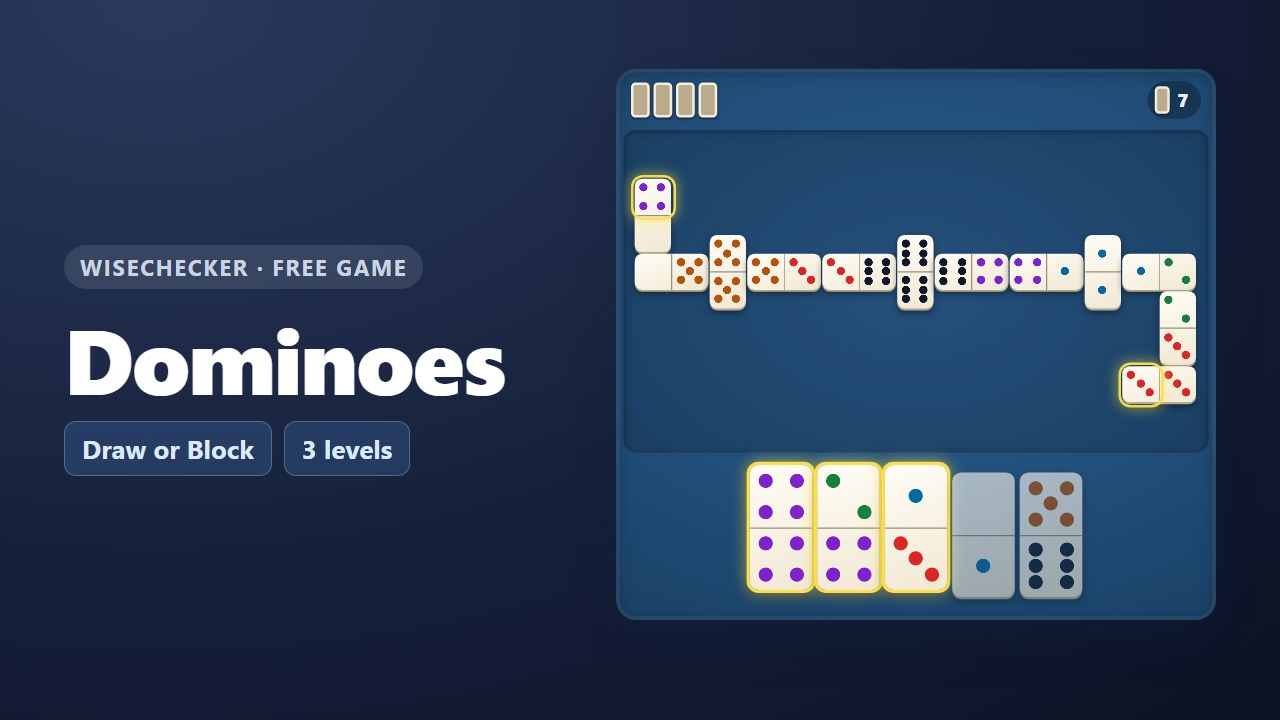 DominoesClassic double-six dominoes against the computer.
 BackgammonClassic backgammon against the computer or a friend.
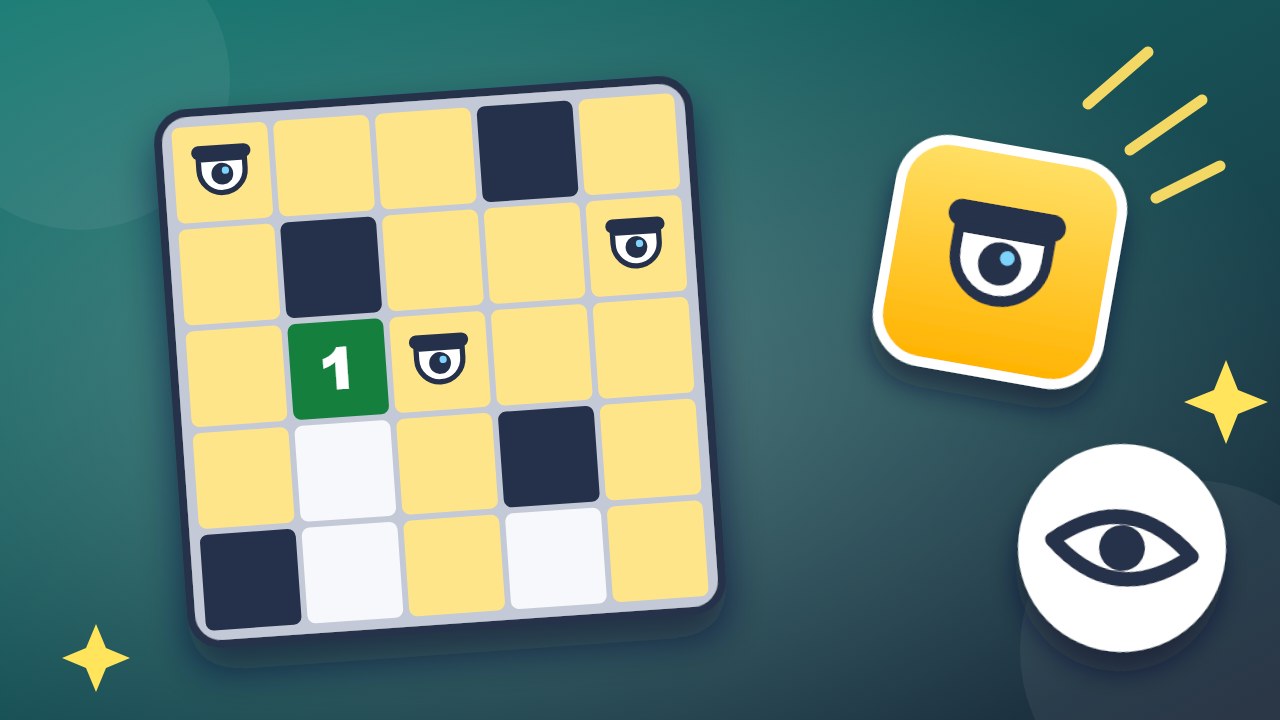 No Blind SpotsPlace cameras so that no square is a blind spot.
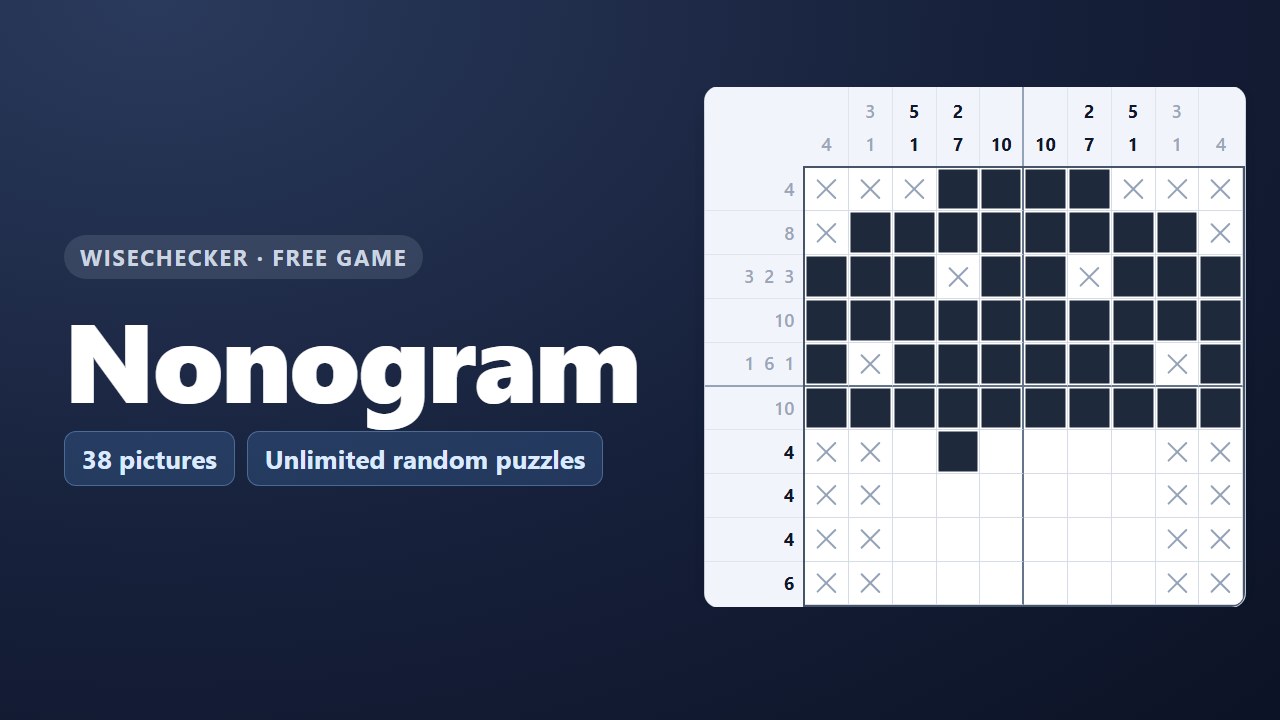 NonogramFill cells from number clues and reveal a hidden picture.
 SolitaireClassic Klondike with Draw 1 or Draw 3 and winnable deals.
 FreeCellFreeCell with numbered deals that a solver has cleared.
Handy free tools
- Print Size & DPIConvert pixels, inches, millimeters, centimeters and DPI; calculate resolution for Letter, A-series, photos, margins and bleed.
- ZIP FilesCreate ZIP files, view contents, extract only the files you need, reload filenames with garbled text, organize folder hierarchies, and check…
- Audio EditorRecord from your microphone, view waveforms, trim, remove silence, change playback speed, and save as WAV—all in your browser.
- ALLAll free toolsSee all 36 tools in one list.