
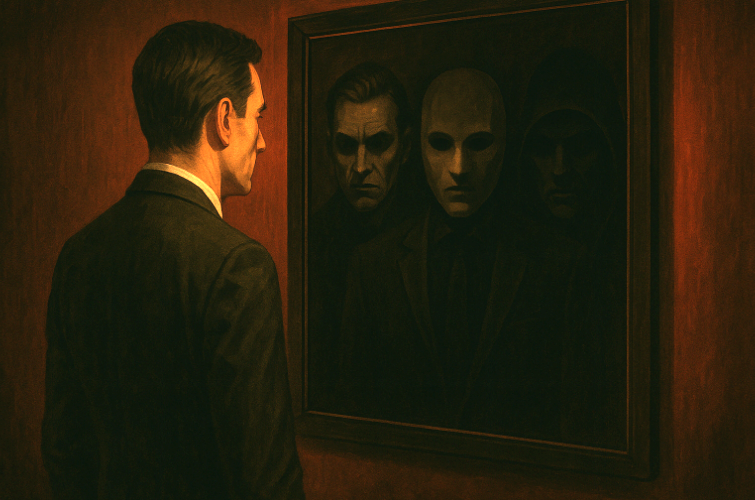
They are charming, confident, and often successful. They walk into a room and command attention. But behind the charisma lies a cold, calculating engine of self-interest. In psychology, this toxic cluster of personality traits is known as the Dark Triad.
While society often focuses on the loud, obvious “bad guys,” the Dark Triad teaches us that the most dangerous individuals are often the ones wearing the best suits, sitting in the corner office, or smiling next to you in a team meeting. This guide dissects the anatomy of these traits and helps you identify—and survive—them.
Contents
1. The Three Faces of Darkness
First identified by researchers Paulhus and Williams in 2002, the Dark Triad consists of three distinct yet overlapping personality traits. While they share a common core of callousness (low empathy) and manipulation, they differ in their motivations and behaviors.
It is important to note that these are sub-clinical traits. We are not talking about serial killers in prison; we are talking about functional members of society who operate with a different moral compass than the rest of us.
2. Machiavellianism: The Puppeteer
“The ends justify the means.”
Named after the Renaissance diplomat Niccolò Machiavelli, this trait is defined by strategic manipulation. Unlike the other two, Machiavellians are not necessarily impulsive or ego-driven. They are calculating.
- Behavior: They view people as chess pieces. They will lie, flatter, or betray if it advances their long-term goals.
- In the Workplace: This is the colleague who steals your idea but presents it so subtly that you thank them for it. They avoid emotional attachments because emotions cloud judgment.
- The Key Indicator: Cynicism. They believe everyone else is also manipulative, so they must strike first.
3. Narcissism: The Mirror Gazer
“I am the most important person in this room.”
Narcissism is perhaps the most easily recognized trait. It stems from a deep need for admiration and a sense of entitlement. However, psychologists distinguish between “Grandiose Narcissism” (bold, aggressive) and “Vulnerable Narcissism” (defensive, hypersensitive).
- Behavior: They dominate conversations, exaggerate their achievements, and react with rage (Narcissistic Injury) when criticized.
- In Relationships: They “love bomb” partners initially, overwhelming them with affection, only to devalue and discard them once the validation supply runs dry.
- The Key Indicator: A constant need for external validation. They cannot exist without an audience.
4. Psychopathy: The Cold Heart
“I do what I want, when I want.”
This is considered the “darkest” of the triad. Sub-clinical psychopathy is characterized by high impulsivity, low anxiety, and a total lack of empathy or remorse.
- Behavior: They seek thrills. They get bored easily. They may break rules not for strategic gain (like a Machiavellian) but simply because they don’t care about the consequences.
- In Life: They are often risk-takers. While this can lead to criminal behavior, it can also lead to heroism (e.g., firefighters or surgeons who can function calmly in high-stress chaos).
- The Key Indicator: Shallow affect. Their emotional expressions often feel “mimicked” or superficial.
5. Why Do They Succeed? (The Evolutionary Paradox)
If these traits are “bad,” why hasn’t evolution weeded them out? This is known as the Cheater Strategy in evolutionary psychology.
In a stable society where everyone cooperates, a single cheater thrives by taking more than they give.
- Short-Term Mating: Dark Triad individuals (especially men) are often rated as more attractive initially. Their confidence and risk-taking signal “good genes,” allowing them to reproduce before their toxicity is discovered.
- Corporate Ladders: In cutthroat business environments, the ability to make “hard decisions” (firing people, cutting costs) without emotional distress is often rewarded with promotion.
However, this is a “fast life history” strategy. It works in the short term but often leads to long-term isolation and failure as bridges are burned.
How Dark Is Your Personality?
Are you an empath, or do you have hidden Machiavellian tendencies? Self-awareness is the best defense. Take our scientifically-based assessment to find out where you stand on the spectrum.
6. Assess Your Own Dark Side
We all have a shadow. Recognizing these traits in yourself doesn’t make you a villain; it makes you human. The difference lies in action.
A high Machiavellian score might mean you are a good negotiator. A high Narcissism score might mean you have the confidence to lead. The danger comes when these traits control you, rather than you controlling them.
Don’t guess. Measure.
Use the WiseChecker Dark Triad Assessment to get an objective look at your personality architecture. It takes less than 3 minutes, but the insights could save your career—or your relationships.