
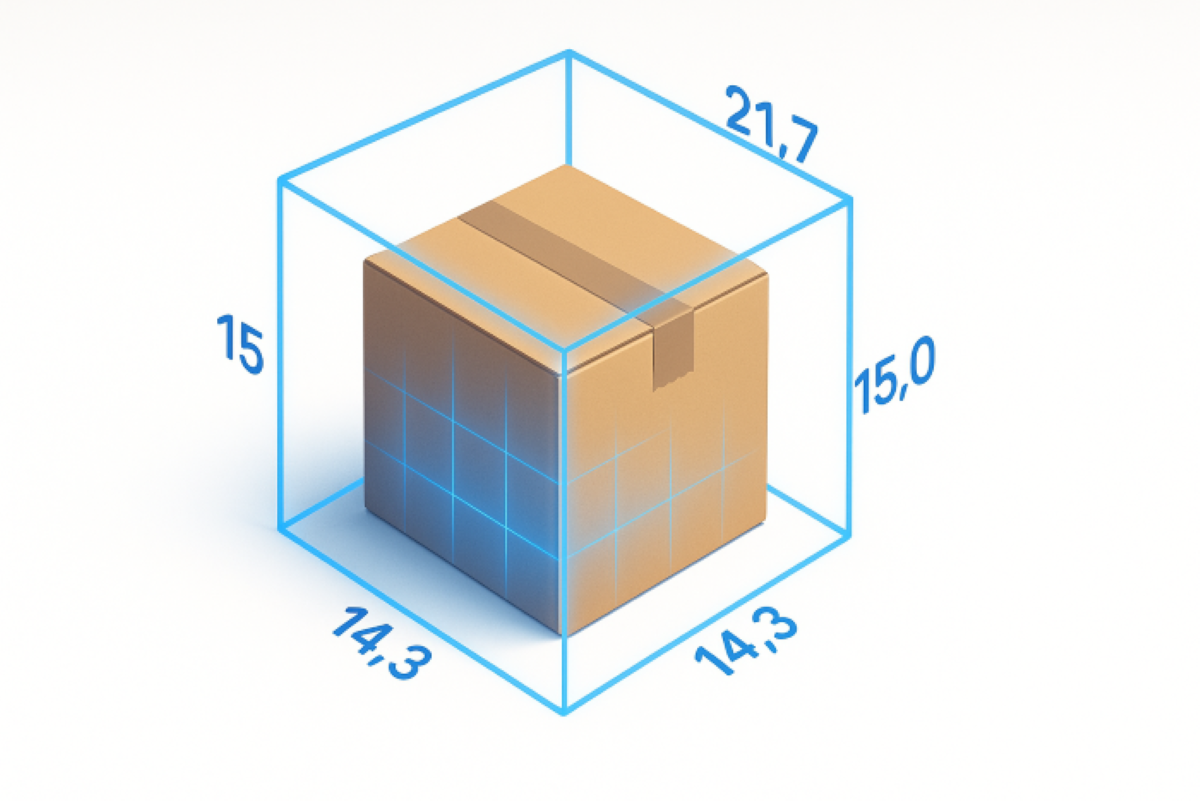
How Volumetric Weight Works
Shipping carriers charge based on whichever is greater: the Actual Weight or the Volumetric Weight.
- Metric: (L x W x H) / 5000
- Imperial: (L x W x H) / 139
📦 The Ultimate Guide to Volumetric Weight
Shipping costs are the silent killer of e-commerce profits and international gifts. Why did your lightweight package cost $200 to ship? The answer lies in “Volumetric Weight” (also known as Dimensional Weight).
1. Why does “Size” matter more than “Weight”?
Imagine shipping a pillow and a bowling ball. The pillow weighs 1kg, but occupies a huge box. The bowling ball weighs 5kg but fits in a small box.
For airlines and courier companies (DHL, FedEx, UPS), space is money. A plane full of pillows would make no money if they only charged by actual weight. Therefore, they created a rule: “If your package is light but bulky, we charge you for the space it takes up.”
2. The Formulas: How Carriers Calculate It
Different carriers use slightly different divisors, but the logic is the same. Our tool uses the global industry standards:
📏 Metric (cm / kg)
(Length x Width x Height) / 5000
Example: A box is 50cm x 40cm x 30cm.
50 * 40 * 30 = 60,000.
60,000 / 5000 = 12kg (Volumetric Weight).
If the actual weight is only 5kg, you will still be charged for 12kg.
📐 Imperial (inch / lb)
(Length x Width x Height) / 139
Note: Some domestic US services use 166 as the divisor, which is cheaper. International shipments typically use 139.
3. Wise Tactics: How to Reduce Shipping Costs
Now that you know the math, here is how to beat the system (legally).
✅ A. Vacuum Seal Everything
If you are shipping clothes, plush toys, or bedding, use a vacuum seal bag. Reducing the volume by 50% can literally cut your shipping cost in half.
✅ B. Cut the Box Down
Never ship “air.” If your item only fills half the box, cut the corners of the box and fold it down to reduce the height. Every centimeter counts.
✅ C. Use “Poly Mailers” instead of Boxes
Cardboard boxes add rigid dimensions. For non-fragile items (clothing, books), use a flexible poly mailer bag. Carriers often calculate these differently or they naturally compress, saving volume.
4. Carrier Comparison (Divisors)
Always check the “Divisor” used by your specific carrier. A higher divisor is better for you (lower chargeable weight).
| Carrier | Divisor (Metric) | Strictness |
|---|---|---|
| DHL Express | 5000 | Very Strict |
| FedEx Int’l | 5000 | Very Strict |
| EMS (Japan Post) | 6000 | Lenient (Often ignored for small items) |
*Rules are subject to change. Always verify with the official carrier site.